
How cookbook author and recipe developer Kiano Moju built Jikoni - a preorder-only Kenyan and Nigerian pop-up and supper club - and why she skipped the restaurant.
There are no Kenyan restaurants in Los Angeles. So when readers of her cookbook kept asking Kiano Moju where they could try this cuisine, she started serving it herself. Today that food lives at Jikoni (Swahili for "kitchen"), a culinary studio where Kiano hosts communal dinner parties, a Sunday grill series called Choma, and pop-ups built around one belief: African food is everyday food.
From cookbook to kitchen
Kiano's mom is from Kenya and her dad is from Nigeria; she grew up in California. That mix gave her debut cookbook its name, AfriCali: Recipes From My Jikoni, which The New York Times, Food & Wine, Bon Appétit and the Los Angeles Times named one of the best cookbooks of 2024.
Kiano built her career as a recipe developer. She still writes editorially for NYT Cooking, and tests those recipes midweek in the same kitchen where she hosts dinners on the weekend.
The book tour is what pushed her into pop-ups. "I really wanted to bring the book to life and cook those recipes," she says. In April 2025, she started with pop-ups at wine bars, then took a residency at a food hall in Culver City from June to November. When the building closed with little notice, she faced a familiar question for pop-up chefs: "Oh my god, where are we going to cook now?"
Why not a restaurant?
After the residency closed, Kiano did look at restaurants, with help from regulars who worked in real estate. The numbers didn't work. "The math [is] scary stuff," she says. "Restaurants in LA are really tough, and there's nothing we saw in the market that made us feel like we will succeed here."
So she went back to something she already knew how to do. From 2019, she spent five years running a kitchen studio in LA's Arts District that was a rental space where brands did photo shoots and other chefs hosted dinners. “I should just make a new studio and do dinners out of there," she thought. "I built three studios before. I can build one more."
Preorders make the model work. Every Jikoni experience is booked in advance, so Kiano knows exactly who's coming and how much to cook, without the guesswork of a dining room that may or may not fill.
Building the Jikoni Studio
Walking into the Jikoni Studio, you’d never guess it started as “a white box” just two months before it opened. Kiano wanted the space to feel like an extension of her home, not a restaurant. She filled it with pieces collected on her travels, including fans and baskets from Senegal, and tracked down LA shops that carry African fabrics for the dining room curtains.
"This studio is brought to you by Facebook Marketplace" Kiano told us. People buy appliances, find out they don't fit or don't have the right voltage, and sell them cheap. "I got that oven for $300."
The studio’s layout changes depending on the concept: Choma on the patio on Sundays, dinner parties, pop-ups, and booked private dinners. The schedule varies with what’s going on at Jikoni that week.
A new concept every season
Instead of running one fixed menu, Jikoni rotates concepts with the seasons:
Dinner parties in the spring: When the studio opened, Kiano started out by hosting dinner parties.
Choma in the summer: "What better thing to do when it's 100 degrees out than stand in front of an open fire and grill?" Choma runs through October.
Dinner parties resume for the holidays: "In November, dinner parties are back for the holidays, the best time to cook."
For a more private experience, you can also book a private dinner at the studio, where the Jikoni team prepares a family-style feast for you and your guests.
Choma: Sunday, Kenyan style
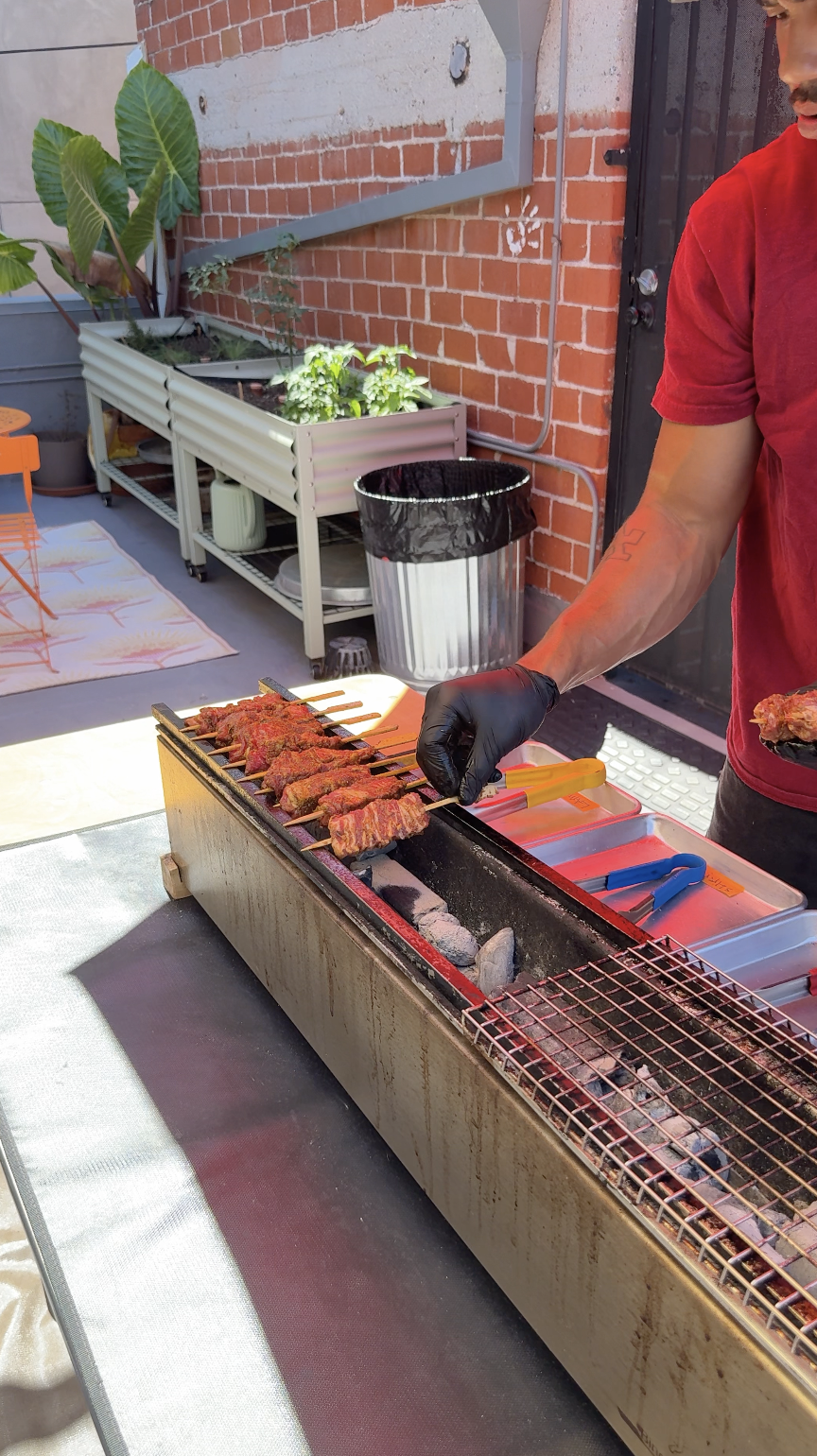
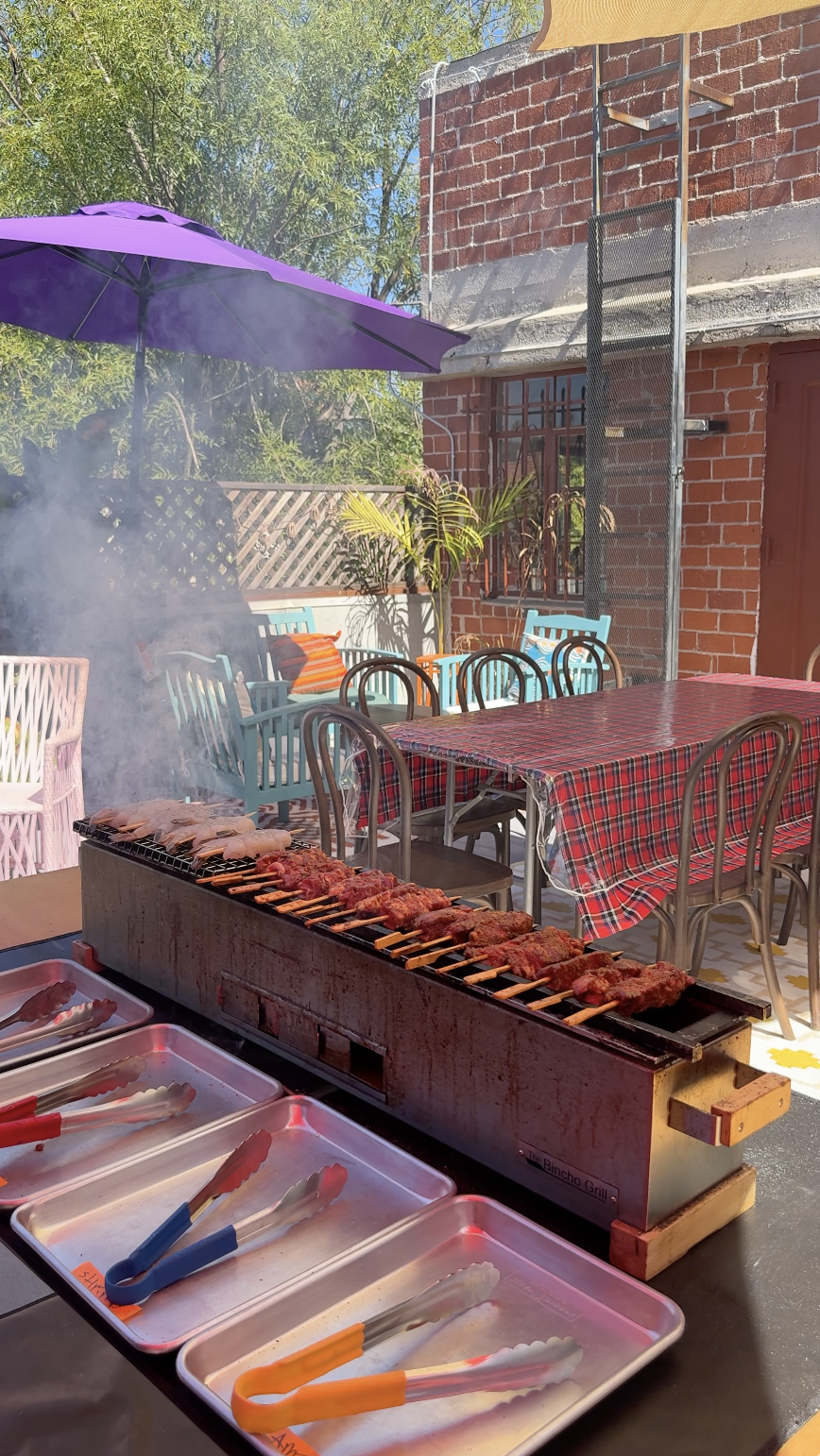
Choma means "grill" or "roast" in Swahili, and it's Jikoni's AfriCali take on mishkaki, the Swahili word for skewers. It's built around a Kenyan Sunday tradition. "If you ask any Kenyan what their favorite food is, the answer is meat. It doesn’t matter. Meat over fire? We love it" Kiano says. Her grandparents are traditional Maasai ranchers, and on Sundays the family would build a fire, roast a goat or sheep, and eat all day.
"I think every culture has their Sunday tradition," she says. "The Italians have Sunday gravy. In Kenya on Sundays, we're doing choma." It's meant to be relaxed: grab a Kenyan beer, sit on the patio or in the AC, and spend the afternoon with good food and good people.
The mishkaki platter
The platter changes monthly. Each one serves one person as a meal or two as a snack. October's included:
Skewers:
2 rosemary lamb suya, grilled and showered with yaji, Nigeria's peanut-based suya spice blend
2 steak mishkaki, a coastal Kenyan classic marinated in a house butcher's masala
1 peri peri shrimp skewer: 4 jumbo shrimp basted in a garlicky, spicy herb butter
Kijani sauce, an herb yogurt
Kale + egusi: kale braised with ground Nigerian melon seeds. ("I don't know why people eat kale raw. Hopefully this will encourage you to stop eating kale salad.")
Sweet corn attieke salad: cassava couscous with sweet corn and a lemon vinaigrette, whose "bright tanginess" balances the plate
Coconut butter beans in a creamy coconut sauce inspired by the coastal curries of East Africa
Chapo, a handmade, layered Kenyan flatbread for ripping and scooping
Forks are available but not needed. "Everything we do, you should eat with your hands," Kiano says. "Please eat with your hands."
Poussin wings
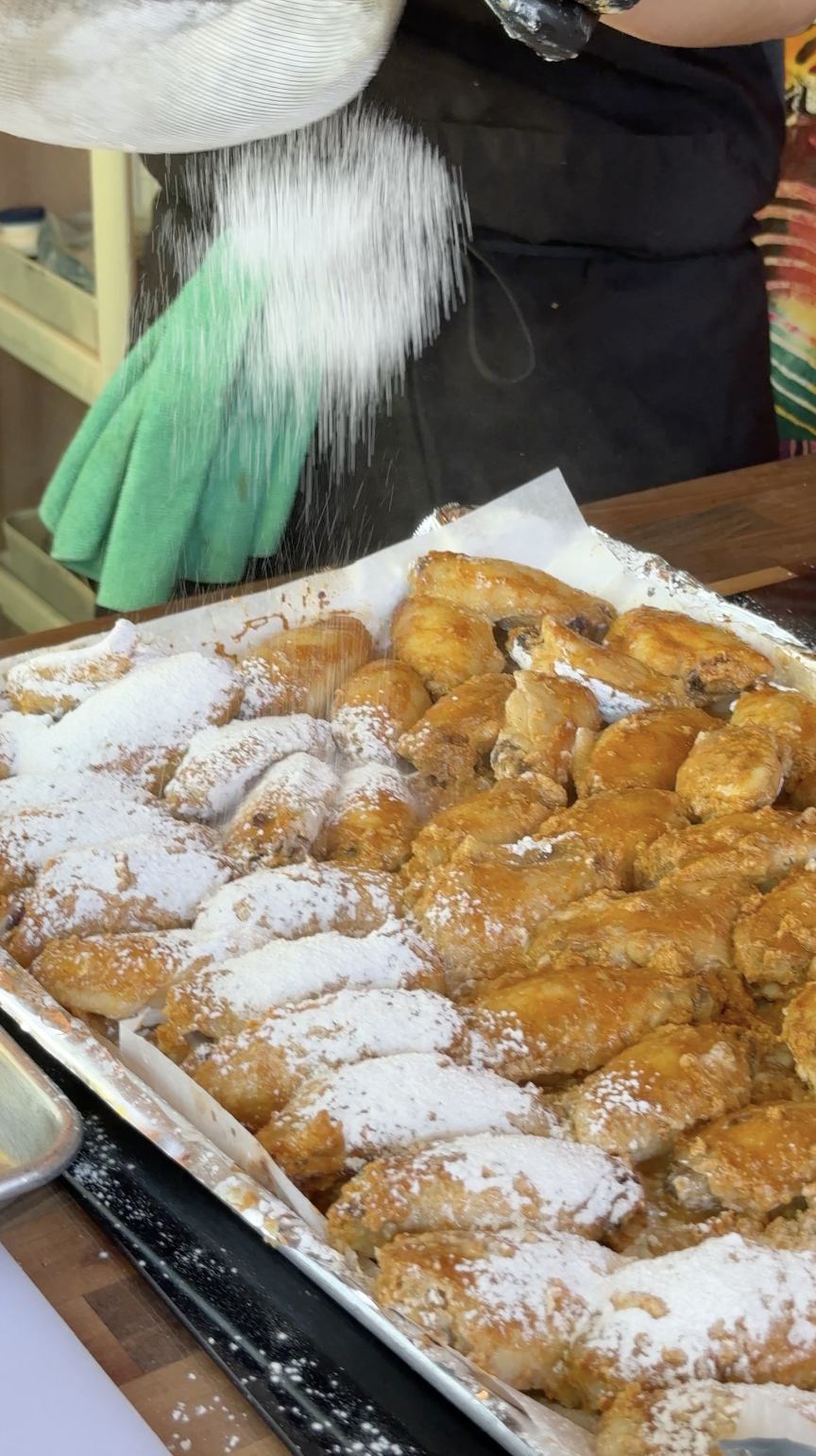
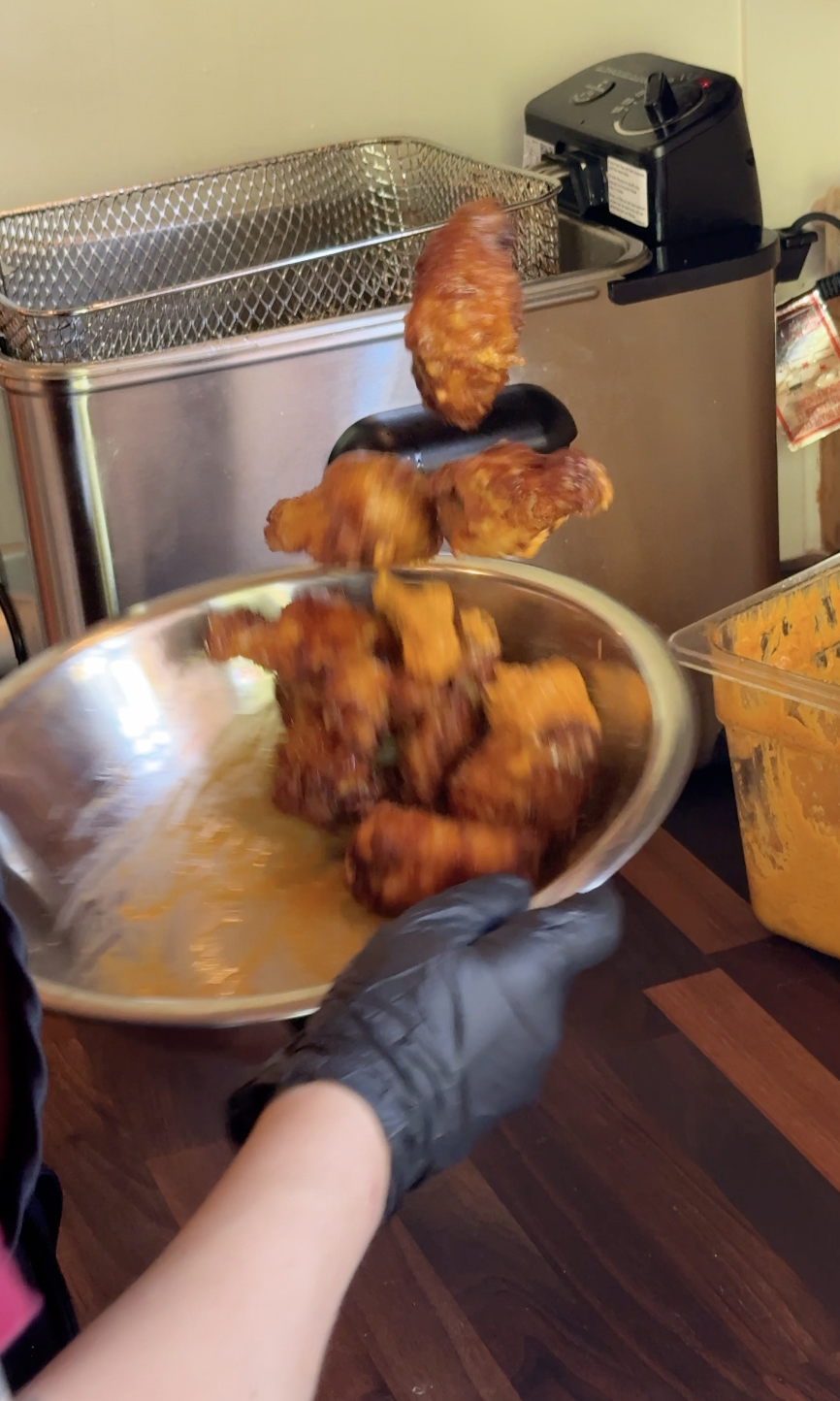
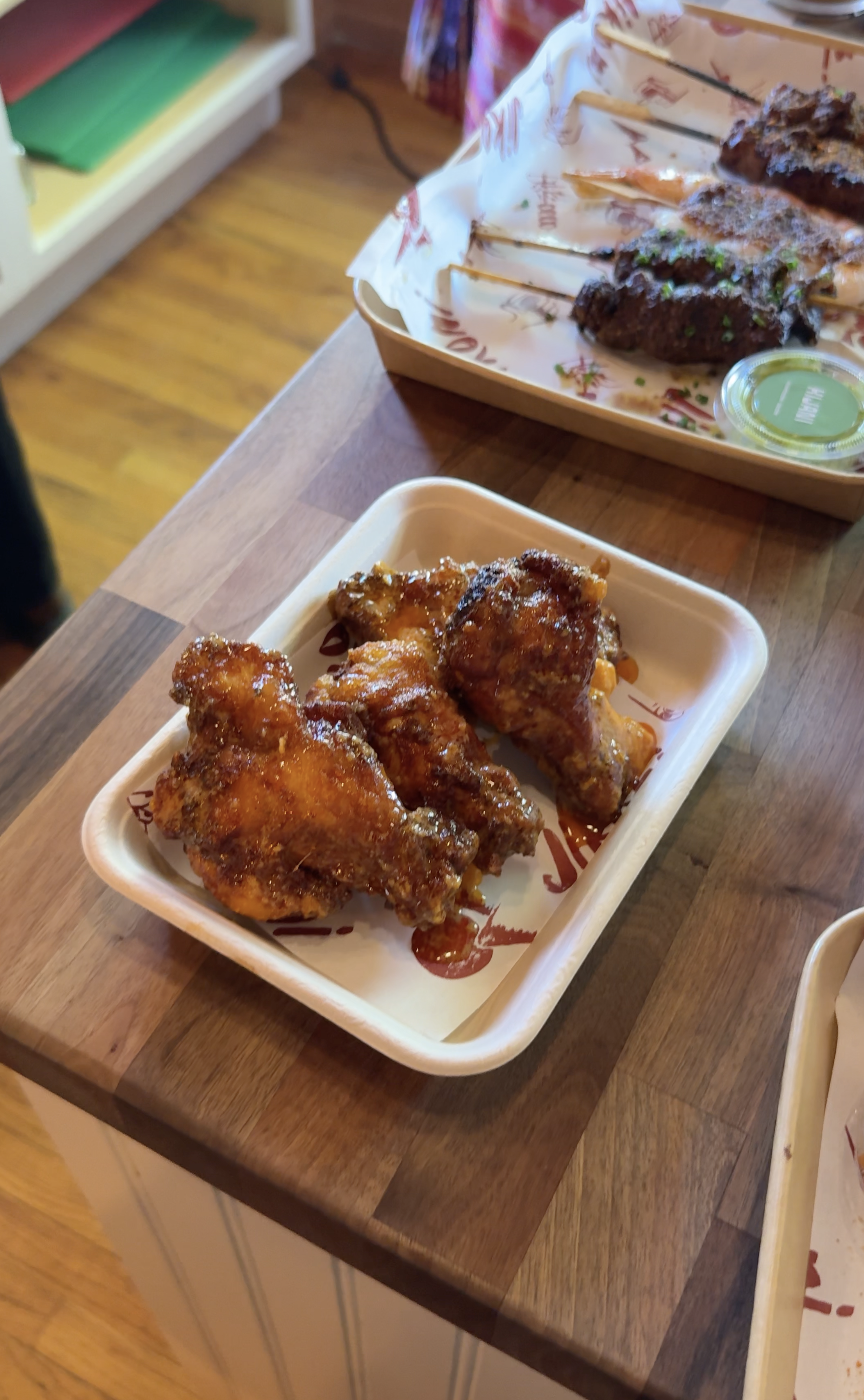
The one fried item on the menu is an add-on that has followed Kiano to every pop-up. Poussin wings riff on Kenyan chicken shops, where rotisserie chicken is flash-fried to order and drenched in Poussin sauce, a chili lemon butter.
Jikoni's version marinates the wings overnight in yogurt and house-made spices, then slow-bakes them to keep them juicy. A little tapioca flour adds crunch. The wings are flash-fried to order and finished in the sauce. When a venue can't accommodate frying, Kiano serves a grilled version instead, because the chicken always comes. "Poussin chicken and pie have become two Jikoni staples. They are a part of us."
The Karakara pie
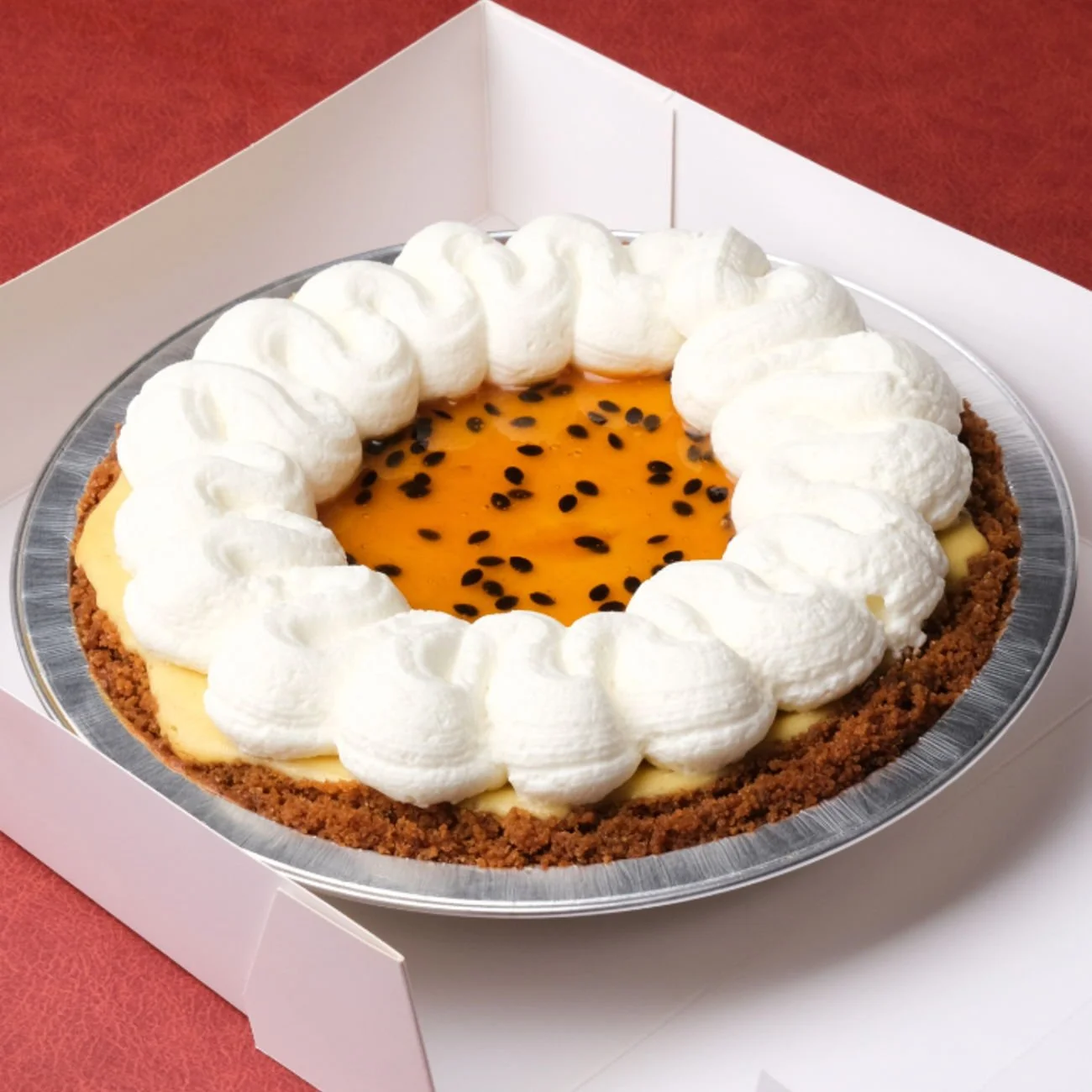
"The pie is the thing," Kiano says. "Doesn't matter what popup we've done. It has been on every popup menu." She sometimes wonders whether Jikoni should "just make our lives easier and become a pie shop."
Karakara is Swahili for passion fruit. The pie is passion fruit and lime on a ginger snap crust, topped with piped whipped cream (with a little cream cheese folded in) and passion fruit syrup.
Every element has a reason. Neither of Kiano's cultures has a big dessert tradition beyond fried dough like Kenyan mandazi and Nigerian puff-puff. So she builds desserts from the flavors that are there. Passion fruit juice is on the menu at nearly every restaurant in Kenya. Ginger is a rare overlap between her Kenyan and Nigerian heritage. The ginger snap also nods to Kenya's tea culture: "Tea and something, whether it's a biscuit or whatever, fits in really nicely."
For the holidays, whole pies come with little bags of hibiscus sugar to sprinkle on just before serving. The hibiscus brings back the purple of the passion fruit and adds a tartness that suits the filling. Just don't add it too early: "It melts in and it looks crazy."
Who comes to Jikoni
Kiano has lived in LA since 2013, and the city still has no Kenyan restaurants. "I think the nearest would be San Diego, which is not close at all despite how it looks on a map." On her book tour, people kept asking where they could try this food, and she didn’t have a good answer.
Jikoni's guests tend to fall into two groups:
The curious: People who spot the food on social media and are "just excited to try something different."
The homesick: East African communities, especially from Kenya, Tanzania and Uganda, whose cuisines share a lot. Word of mouth brings them from across Southern California. As Kiano puts it, they say: "My friend told me, and I drove from Orange County or from the IE, because I haven't had a chapati that wasn't made by me in a very long time."
How Jikoni runs on Hotplate
Everything at Jikoni is preorder only; no walk-ins. Hotplate handles both of Kiano's formats.
Supper club tickets. Dinner parties are sold as tickets for "a vibrant, bold & communal supper club" built around a seasonal, family-style menu. The listing makes the evening clear before guests arrive:
A 3-course menu, served family-style for the table to share
A non-alcoholic welcome drink and post-dinner chai
BYOB
Communal seating, so guests can come solo or with friends
A 2-hour dining experience
Groups of 6 can book a private table
Choma preorders. For Sunday Choma, guests preorder mishkaki platters and mini Karakara pies.
Two settings keep production manageable:
Max per order - caps party size, so tables and seating stay predictable
Max per pickup time - limits bookings for each time slot, so the kitchen doesn’t get overbooked and every round goes out on time.
The result is the restaurant experience without the restaurant risk. Kiano knows who is coming when before her team begins prepping.
Thinking about hosting your own dinner parties?
You don’t need a restaurant to cook for guests. Chef Kiano’s model works for anyone who’d rather host on their own terms: a supper club in your backyard, a chef’s table in a rented kitchen space, or a holiday feast for a dozen strangers who leave as friends.
On Hotplate, you can:
Sell tickets to your dinner, with the menu, what’s included and the house rules (like BYOB) right in the listing.
Control your group sizes with a max per order, and offer private tables for larger parties.
Cap how many guests you cook for at each seating, so the kitchen never takes on more than it can handle.
Get paid up front. Guests pay when they book, so you know exactly who’s coming before you shop.
Fill your table by texting your subscribers the moment tickets go on sale.
As Kiano says, the holidays are “the best time to cook.” It’s also when people are looking for reasons to gather, and for gifts that are experiences rather than things. If you’ve been thinking about hosting a dinner party, this is the season to try one.
Start selling dinner party tickets on Hotplate →
In LA? Dinner parties return to Jikoni in November. Book a seat →
